I. Development of Inhibitors of Tau Oligomerization
Tau protein exists in multiple pathological conformations that are linked in various capacities to Alzheimer's disease (AD) and other neurodegenerative disorders. Among these conformations, tau oligomers are potentially the most pathogenic species, impinging on multiple aspects of cellular physiology. However, there are no approved drugs that selectively target this form of tau.
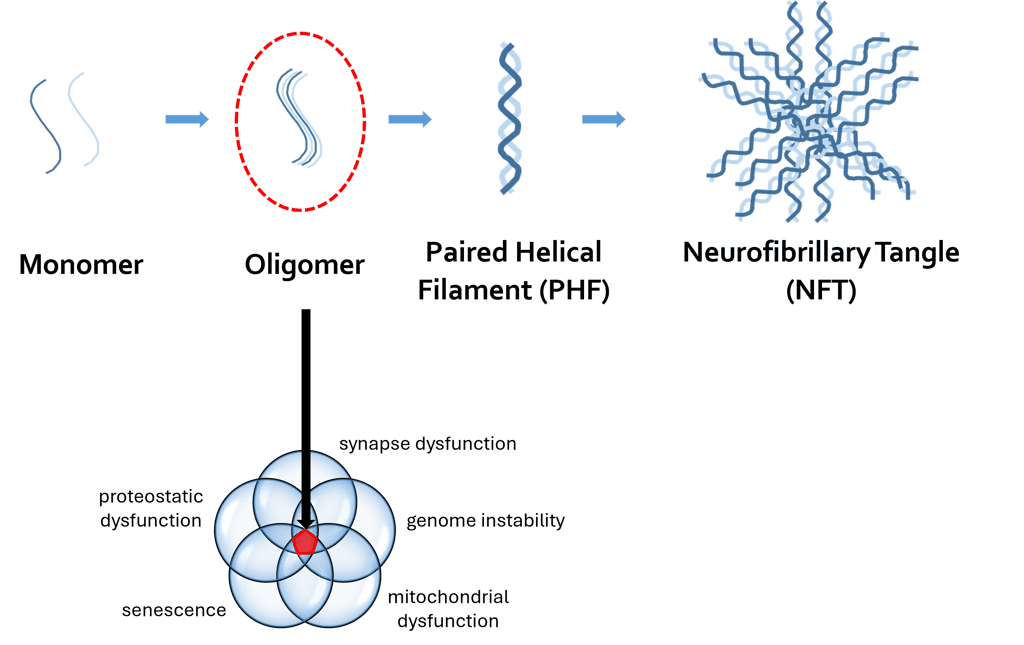
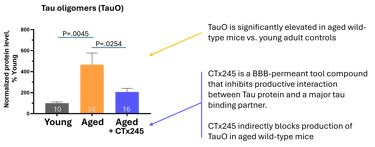
Targeting tau oligomers (TauO) directly is a major challenge, in large part because the precise identity of endogenous, pathogenic TauO has yet to be determined. We have pursued an alternative strategy of targeting proteins that opportunistically promote formation and accumulation of TauO. Using novel high-throughput screening assays, our group has identified small molecule inhibitors of major tau interaction partners that actively drive the formation of TauO (below).
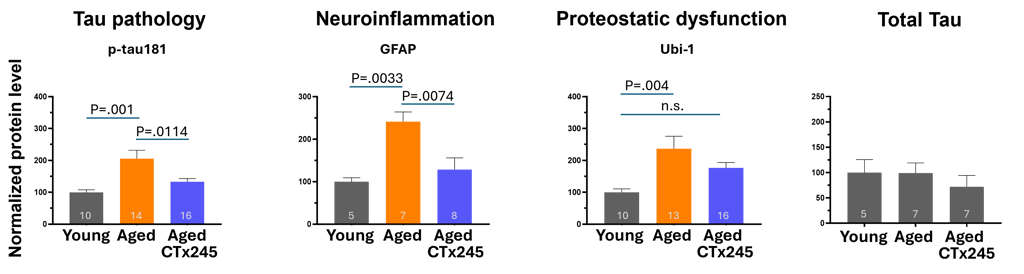
Importantly, treatment-dependent reduction of TauO is associated with reduced tau pathology, neuroinflammation, and other disease-relevant phenotypes (selected markers shown below), consistent with the pleiotropic nature of TauO-mediated cellular toxicity. It is notable that CTx245 does not significantly impact total tau levels. Tau serves a variety of normal cellular functions, so an ideal therapeutic will exhibit selectivity for pathogenic forms of tau over normal tau.
Ongoing work includes SAR, selectivity profiling, nGLP toxicity, and additional in vivo efficacy as we advance toward IND-enabling studies. While PSP is our initial indication, we envision this therapeutic strategy to be be broadly relevant to tauopathies.
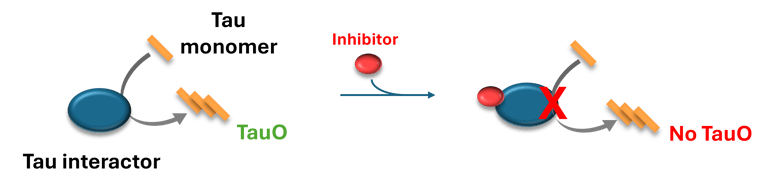

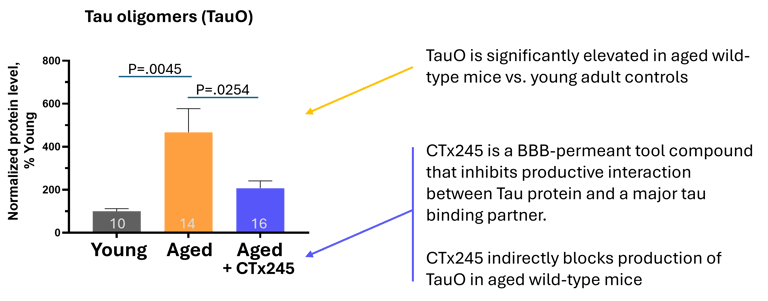
Our BBB-penetrant compounds reduce TauO levels in the CNS of aged wild-type mice (below) and in common transgenic tauopathy models (not shown).
II. Drug Discovery for Novel PSP Targets
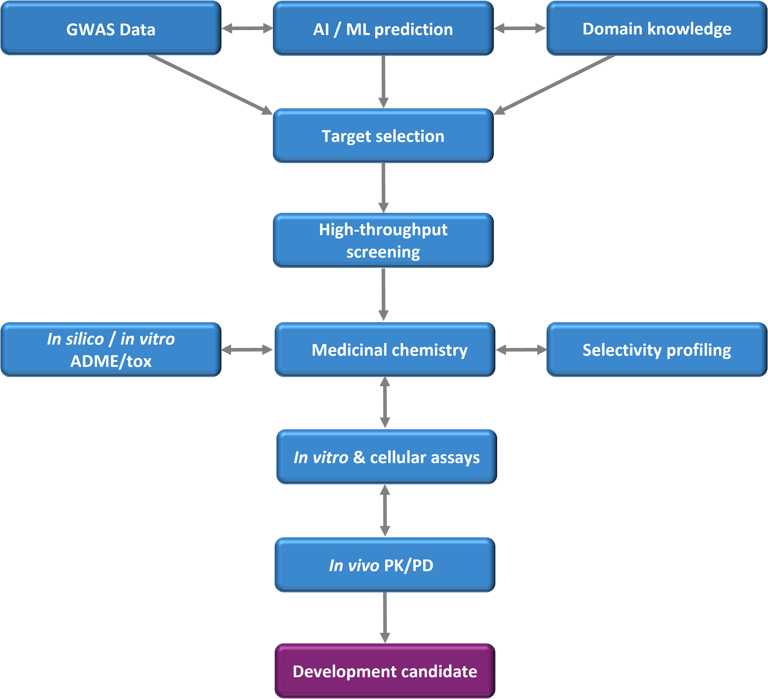
There are no disease-modifying therapeutics for progressive supranuclear palsy (PSP). While tau remains a pre-eminent therapeutic target, GWAS studies have identified several new PSP susceptibility loci with potential therapeutic relevance. With support from the high-throughput screening core facility and medicinal chemists at CUIMC as well as CROs, our laboratory is conducting preclinical drug discovery studies for novel PSP drug targets.